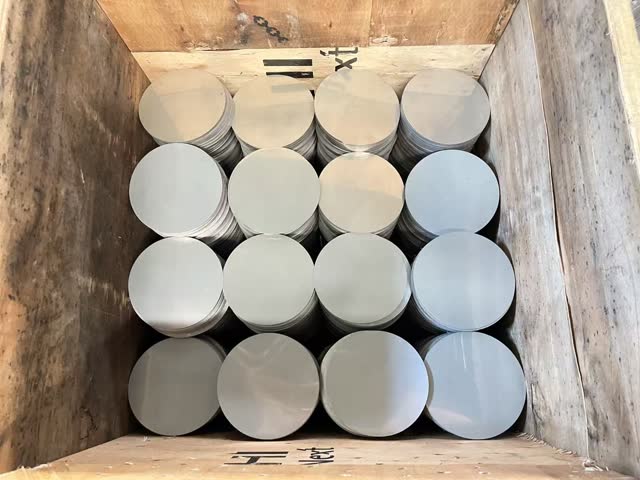
Form selection looks like a logistics issue, but it is actually a cost structure issue: coil usually has the lowest unit price, but requires cut-to-length equipment; cut-to-length sheet is more convenient, but you pay extra cut-to-length fees and edge trim loss per ton.
| Form | Advantages | Extra Costs | Suitable For |
|---|---|---|---|
| Coil | Lowest unit price, no length limit, continuous stamping possible | Requires a cut-to-length line or outsourcing | Continuous stamping, in-house cut-to-length capability |
| Cut-to-length sheet | Direct blanking, length as needed | Cut-to-length fee + head and tail loss (about 0.5–1%) | Single-sheet processing, small batches, no cut-to-length equipment |
| Slit strip | Width directly to size, reduces stamping scrap | Slitting fee + edge trim loss (1–3%, higher for narrower widths) | Continuous stamping of narrow parts, tube making |
| Disc | Direct forming, no blanking process | Priced per piece, cost determined by layout utilization | Cookware, flanges, heads |
Let's Do the Math
Take 1.5 mm × 1219 mm 304 cold-rolled coil with a monthly usage of 50 tons as an example:
- Buying coil and cutting to length yourself: lowest material price, but requires a cut-to-length line; suitable for monthly usage consistently above 100 tons.
- Buying cut-to-length sheet: about 150–300 yuan more per ton, but saves equipment and labor; usually more cost-effective for monthly usage below 50 tons.
- Buying slit strip: the narrower the width, the higher the edge trim loss ratio. When width < 100 mm, loss can reach 3–5%; in this case, recalculate whether to switch to stamping from full coil and then trimming.
Hidden Differences in Lead Time
Coils in standard specifications are usually in stock, while cut-to-length and slitting require scheduling (generally 3–7 days). When lead time is tight, "buying coil + local cut-to-length" is often faster than "waiting for cut-to-length sheet" — this matters more than material price for urgent orders.
Tell us your finished product dimensions and monthly usage, and we can calculate the actual delivered-to-factory cost for the three forms "coil / cut-to-length / slitting", rather than just comparing unit prices.