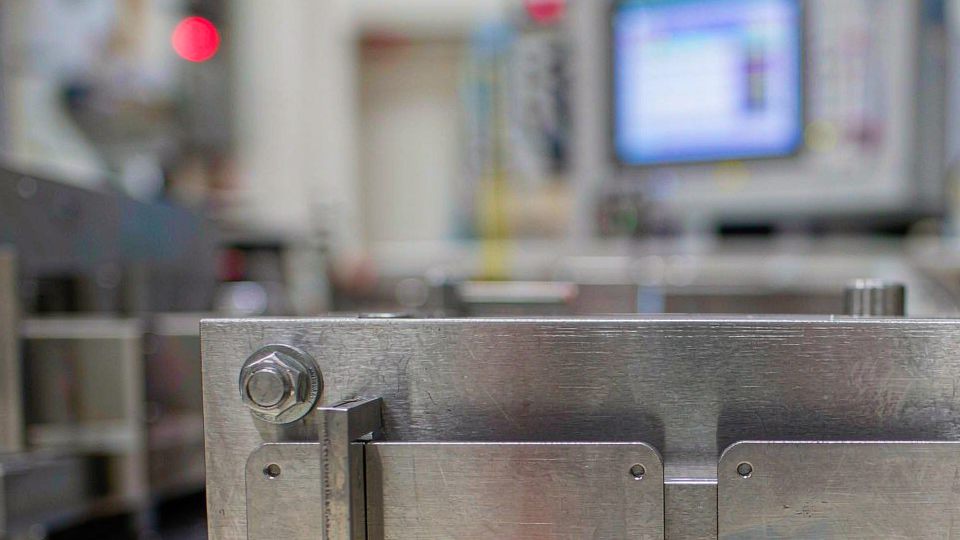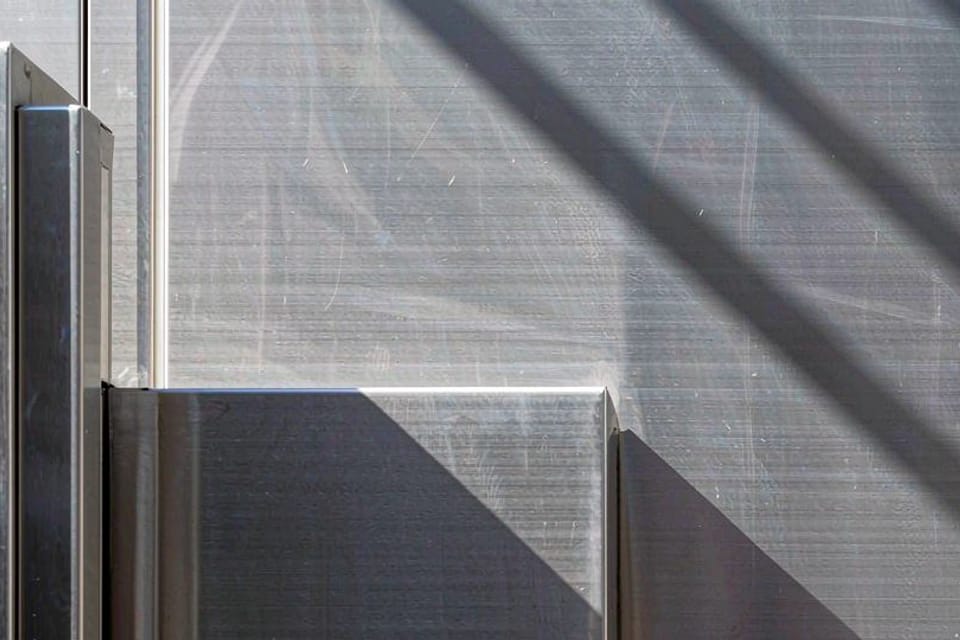
The same grade in 2B and 8K can differ in price by more than 30%, and their corrosion resistance also differs — because surface roughness determines whether the passive film can exist stably. The lower the Ra, the less prone it is to scaling and pitting.
| Finish | Process | Ra reference | Typical applications | Notes |
|---|---|---|---|---|
| No.1 | Hot rolled, then annealed and pickled | — | Industrial equipment, structural parts, base material for further processing | Rough surface, not for appearance parts |
| 2B | Cold rolled, then annealed, pickled and skin-passed | 0.2–0.5 μm | The most general cold-rolled finish, cookware, home appliances, curtain wall base sheets | Good flatness, can be directly film-laminated |
| BA | Bright annealing after cold rolling (protective atmosphere) | 0.05–0.2 μm | Mirror substitute, cookware liners, decorative strips | Cheaper than 8K, slightly lower brightness but more uniform |
| HL | Abrasive brushing | 0.5–1.5 μm | Elevator door frames, appliance panels, railings | Grain direction must be consistent, otherwise seams are obvious |
| 8K | Progressive polishing to mirror finish | <0.05 μm | High-end decoration, reflective mirrors, display fixtures | Prone to fingerprints and scratches, requires film protection |
Three common pitfalls
- Polishing 2B directly to a mirror finish exposes defects: roll marks and waviness on the base sheet are amplified after polishing. For 8K, choose a base sheet with a higher surface grade (judged per ASTM A480); do not force-polish ordinary 2B.
- Inconsistent brushing direction: when two HL sheets with opposite grain directions are joined under light, they visually appear as two different colors. When ordering, specify requirements such as "grain direction parallel to sheet length".
- Incomplete pickling causes false corrosion resistance: if residual acid on hot-rolled No.1 is not cleaned off, it is not visible in the short term, but rust lines appear along the rolling direction after a few months. Require passivation records at acceptance.
It is recommended to write the surface grade into the contract: according to the judgment clauses of ASTM A480 or EN 10088-2, rather than just writing "2B". This provides a basis when disputes arise over color differences or scratches.