
B15 · Houseware & Kitchenware
Stainless Steel Sheets for Kitchenware: 304/201 Selection and List of Four Parts
In Our Kitchenware, We Organized Four Stainless Steel Parts: Commonly Used 304 / 201 / 316, Thickness from 0.3–5 mm.
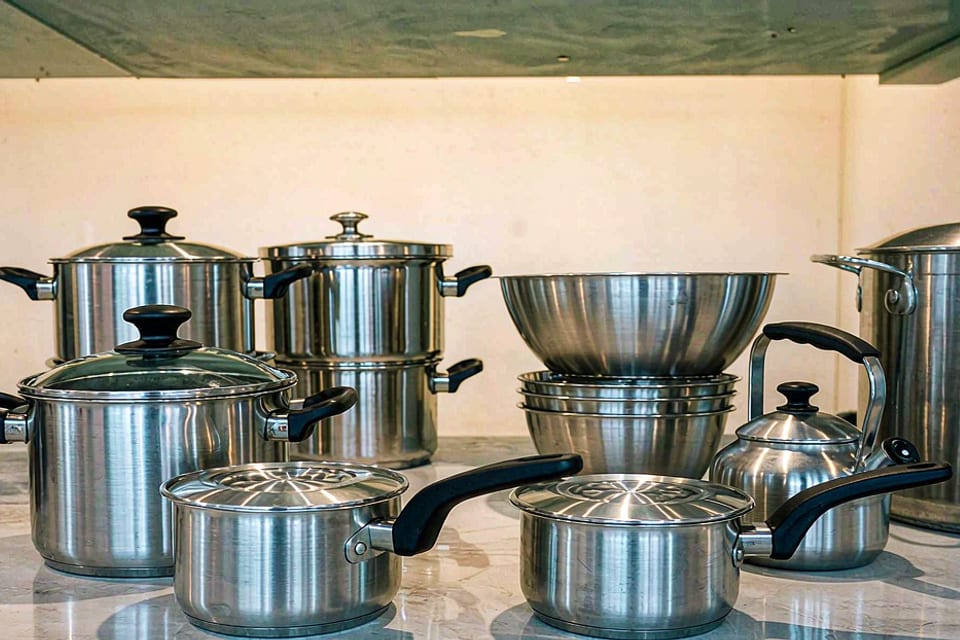
Four Parts and Material List
| Part / Component | Recommended Grade | Size / Thickness | Surface | Configuration | Standards |
|---|---|---|---|---|---|
| Cookware/Dish/Ceramic Insulators | 304/316/201 | 0.3–1.2mm | 2B/ Electrolysis/Polishing | Food Contact + Acid + Cleaning + Dry Burn Color Change | GB/T 3280; GB 4806.9 |
| Cutting Tools/Slicing Blades | 420/440 | 1–5mm | Quench Hardened + Polished | Edge Wear + Chipping + Food Acid Corrosion | GB/T 1220; GB 4806.9 |
| Sink/Laminate Countertops/Water Shields | 304/201 | 0.8–3.0mm | 2B/Rubbed/Draped | Moisture + Dishwashing Liquid + Scratches + Food Contact | GB/T 3280; GB 4806.9 |
| Material Selection Tips | 304/201 | 0.5–2.0mm | Mirror/Sanded/Gilded | Moisture + Soap Solution + Scale + Hand Sweat | GB/T 3280 |
Inside IsStandard ConfigurationCommon Grades: 304 (3), 201 (3), 316 (1)
Material Types
- 304, 201, 316
- Start with 316L in acidic media, go higher with concentration and temperature to 904L / duplex (2/4 hits).
- Thickness range 0.3–5 mm: thin plates are for forming pieces (consider bending rebound and deep drawing cracking), thick plates are for welded structures (consider heat input and sensitization).
Frequently Asked Questions
Which stainless steel is used most for home goods and kitchen utensils?
By total pages, the top 4 are: 304 (3), 201 (3), and 316 (1). For specific parts, consult media and temperature, e.g., stainless countertops require 316L when exposed to saltwater.
Which part is the easiest to have problems with?
Failure description, typically for "cooking pots/cups/insulated water bottles": Food contact + salt / acid + cleaning + dry burning changes color; Recommended grades 304 / 316 / 201, thickness 0.3–1.2mm. This scenario recommends specifying medium concentration, temperature, and cleaning method during the design phase.
What thickness should I select?
Thickness range in the list is 0.3–5 mm. For thin plates, consider bending and surface finish; for thick plates, welding and structural strength. Values may vary by equipment manufacturer for the same location, review your drawing or operating conditions.
Related materials and adjacent industries
Delivery Case Studies for Similar Operating Conditions
Kitchenware and Cookware Manufacturing
304 / 201 Stainless Steel Rounds, 0.4–3.0 mm Thick
Deep Drawn Grade, Surface Finish: 2B & BA, Diameter and Weight Customized
Applications4
Thickness0.3–5mm