
B23 · 新能源汽车
纯电动汽车(C36 独立项目)不锈钢板:316L/304 选型及 7 个零件清单
针对纯电动汽车(C36 独立项目),我们整理了 7 个使用不锈钢的零件:常用 316L / 304 / 441,厚度范围 0.075 至 700 mm。
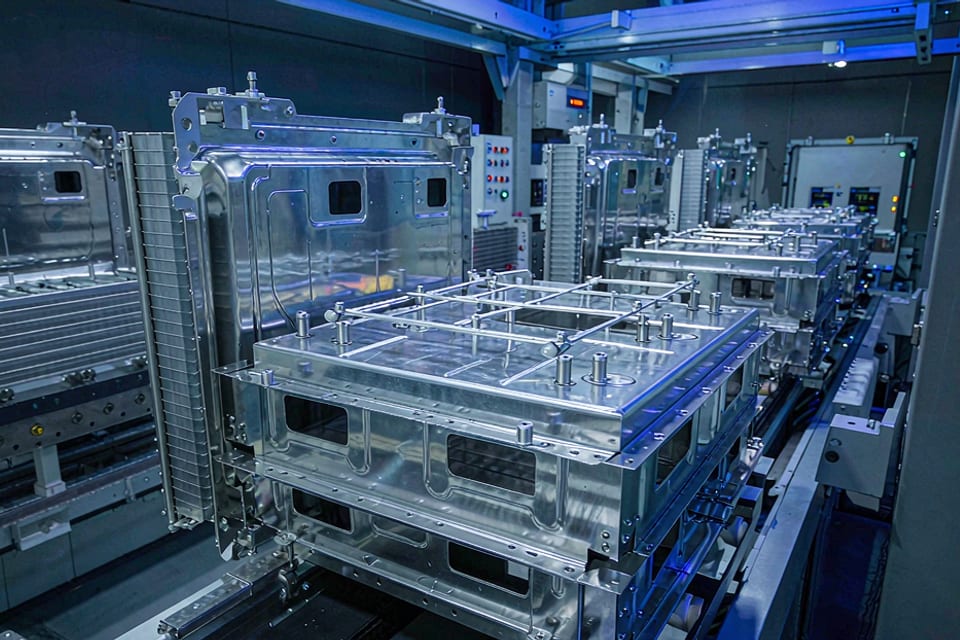
7 个零件清单及材料推荐
| 零件 / 部件 | 推荐牌号 | 规格 / 厚度 | 表面 | 主要失效模式 | 参考标准 |
|---|---|---|---|---|---|
| 钢制托盘/框架(钢/混合方案) | 441/304 | 托盘板 0.8–2.0mm | 2B/涂装/镀镍 | 道路盐雾 + 冷却液泄漏 + 振动疲劳;以钢替代铝主导方案需满足同等耐蚀性 | T/ZPP 327—2026;GB/T 3280;GB/T 31467 |
| 电池钢壳/盖板/贴合板/极片 | 304/316L(优先 LiFSI) | 壳体壁厚 0.3–0.8mm;盖板 0.5–1.5mm | 2B/贴镍 | 电解液腐蚀(在 LiFSI 体系中 316L 优于 304)+ 内部短路 + 振动疲劳 | GB/T 3280;GB/T 31485;主机厂材料规范 |
| 模组端板/卡扣/冷却板接头 | 304/316L/QD2001 | 端板 1–3mm;M6–M10 | 2B/钝化 | 冷却液 EG + Cl⁻ + 振动 → 点蚀/腐蚀裂纹 | GB/T 3280;GB/T 3098.6;GB/T 31467 |
| 热管理管路/管件/换热器 | 304/316L | 壁厚 0.5–2mm | 光亮/酸洗 | 腐蚀 + 压力/温度循环疲劳 | GB/T 3280;GB/T 31467 |
| 质子交换膜(PEM)电极 | 316L904L 薄带 + 涂层 | 0.075–0.15mm | 涂层/光亮 | 酸性 pH 2–4 + 电位循环 → 点蚀 + 接触电阻升高 | GB/T 20042.1;ASTM A240 |
| 车用储氢罐内衬、车用储氢罐阀门、车用储氢罐管路 | 316L | 内衬 2–8mm,PN350–700bar | 2B/处理 | High Pressure Hydrogen→Hydrogen Embrittlement+Cyclic Fatigue | GB/T 33291; ISO 11114-4; GB/T 35544 |
| Hydrogen Inlet/Reducing Valves/High Pressure Connectors | 316L | By Interface | Treated/Grooved Surface | High Pressure Hydrogen+Quick Charge/Discharge Fatigue+Leakage | ISO 19880-1; GB/T 31138 |
Here areStandard ConfigurationsMaterial selection
Consider usage conditions instead of specifying grades
- The most common grades in this industry are 316L (6), 304 (4), and 441 (1). Parentheses indicate the number of affected areas, starting points for quoting and material procurement.
- Corrosion sources include chloride ions and salts (pitting corrosion, fretting corrosion) (2/7 hits).
- Thickness range: 0.075–700 mm (thin plates require bend rebound and deep drawing cracking; thick plates need heat input and sensitization for welding).
Common issues
What stainless steel is used in electric vehicles (separate from C36)?
Counting 7 parts, the most frequent is 316L (6 items), followed by 304 (4 items) and 441 (1 item). Specific to a part still depends on the medium and temperature, e.g., stainless countertops that come into contact with salt water should switch from 304 to 316L.
Which parts are most prone to issues?
Based on failure descriptions, typical is "Battery tray/frame (steel/mixed solution)": road salt spray + coolant leak + vibration fatigue; steel alternatives under aluminum dominance need corrosion resistance matching; recommended grades 441/304, thickness 0.8–2.0mm for trays. For these conditions, it's recommended to specify medium concentration, temperature, and cleaning methods during the design phase.
What thickness should I select?
Thickness range in the list is 0.075–700 mm. For thin plates, consider bending and surface finish; for thick plates, welding and structural strength. Values may vary by equipment manufacturer for the same location. Recheck with your drawing or operating conditions.
Material and Specifications
Applications7