
B11 · Semiconductor & Electronic Gas
Stainless Steel Plates for Semiconductor and Electronic Specialty Gases: Selection Guide and 6 Part Lists
In our semiconductor and electronic specialty gases, we have organized 6 parts using stainless steel: commonly used 316L / 304L with thickness ranging from 0.05–30 mm.
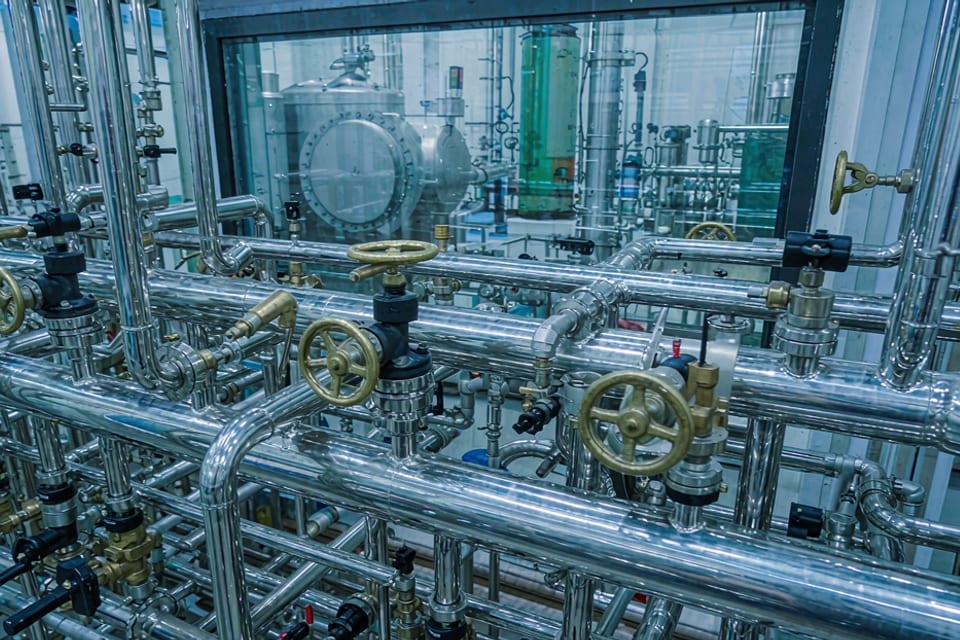
Six Locations and Material Lists
| Location / Part | Recommended Grade | Specifications / Thickness | Surface | Main Failure Modes | Reference Standards |
|---|---|---|---|---|---|
| UHP Gas Transfer Pipelines | 316L VIM-VAR | 1/8″–2″ | Ra≤0.4μm electropolishing; Intergranular Corrosion Testing | Particle retention → wafer contamination; Cl⁻/F⁻ etching; weld heat-affected zone (HAZ) corrosion | SEMI F20 Grade 5;ASTM A269/A632;SEMI F19 |
| Valve Body/Gauges/Diaphragm Valves for Special Gases Cabinet | 316L VIM-VAR Forgings | DN1/4″–1″;Cv 0.05–1.30 | Ra≤0.4μm electropolishing | Seat to pipe wall distance > 1D forms retention dead zones; corrosive special gas etching | SEMI F20 4.6.2;ASTM A182 |
| Gas Filters/Connections/Bosses | 316L VIM-VAR | By interface | Ra≤0.4μm electropolishing | Particulates and corrosion products blockage; connection leakage | SEMI F20;ASTM A269 |
| CMP Slurry/Wet Chemicals Transfer Pipelines | 316L EP/PFA/PTFE lining | 1/4″–2″ | Ra≤0.4μm electropolishing | Abrasion Grinding + Strong Acid/Oxidant + Particle Retention | SEMI F20;SEMI F57;ASTM A269 |
| Wafer Washer/Clamp/Sprayers | 316L/PFA/Silicon/Cubic Silicon Carbide | 3-10mm Vessel | Polishing/Diffusion | Strong Corrosion + Particles Contamination | SEMI F20;ASTM A240 |
| Vacuum Chamber/Faceplate/Observation Window Neck | 304L/316LVacuum Grade | Ship | 2B/Abrasive Polishing/Acid Washing | Low Vacuum Degradation, Welding Leak | ASTM A240;SEMI F20;ISO 3669 |
Rate NotMeet the RequirementsStandard Configuration.Same part can switch from 316L to 304L or 2205 based on usage conditions, saving time by specifying conditions instead of just the material.
Key Points in Material Selection
- Most common grades used are 316L (6) and 304L (1).
- Starting with acid-resistant 316L, go higher with 904L / or duplex (2/6 hits).
- Thickness range: 0.05–30 mm: Thin plates are for forming parts (consider bending rebound and deep drawing cracking), thick plates are for welding structures (consider heat input and sensitization).
Common Issues
Which stainless steel is used most for semiconductor and electronic specialty gases?
Out of the total 6 parts, 316L appears most frequently (6 hits) followed by 304L (1 hit). Specific to a part still depends on the medium and temperature. For example, both stainless countertops would require different grades if one is exposed to saltwater.
What type of areas are prone to issues?
Based on failure descriptions, typical examples include "UHP gas conveying pipes": particle retention → wafer contamination; Cl⁻/F⁻ specialty corrosion; weld heat-affected zone (HAZ) corrosion. Recommended grade 316L VIM-VAR with specifications 1/8″–2″. For these conditions, it's recommended to specify medium concentration, temperature, and cleaning methods in the design phase.
What thickness should I select?
Thickness range in the list is 0.05–30 mm. For thin plates, consider bending and surface finish; for thick plates, welding and structural strength. Values may vary by equipment manufacturer for the same location. Recheck with your drawing or operating conditions.
Related Materials and Adjacent Industries
Applications6